Help – Online Cornell Notes
Online Cornell Notes

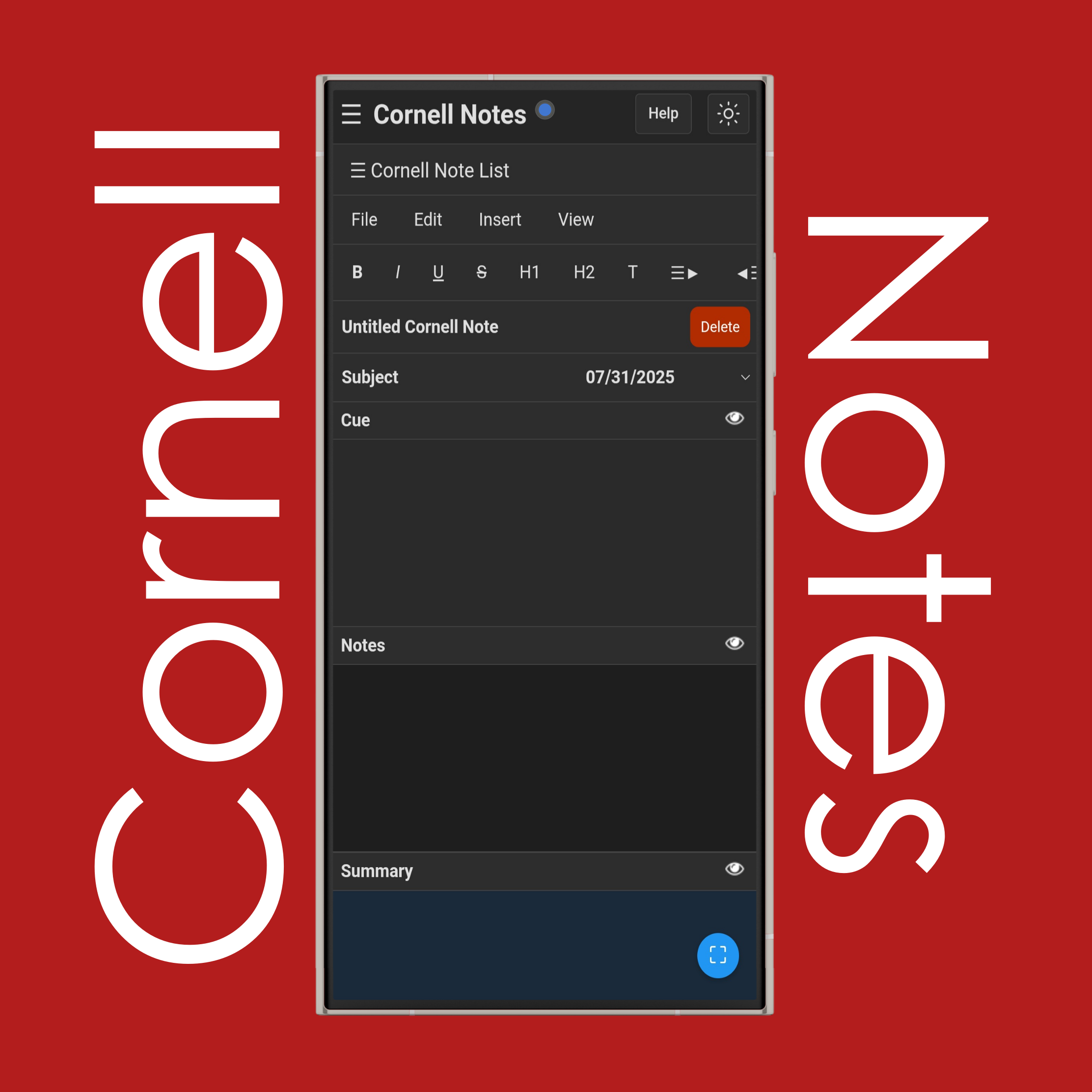
Tap (hamburger menu/three-horizontal-lines) to see 'Note List'.

Cornell Notes List

Tap ☰ Cornell Note List to view, create and edit notes saved on your localStorage.

NOTE: It is all on the left sidebar on desktop (computer).

Create Cornell Notes

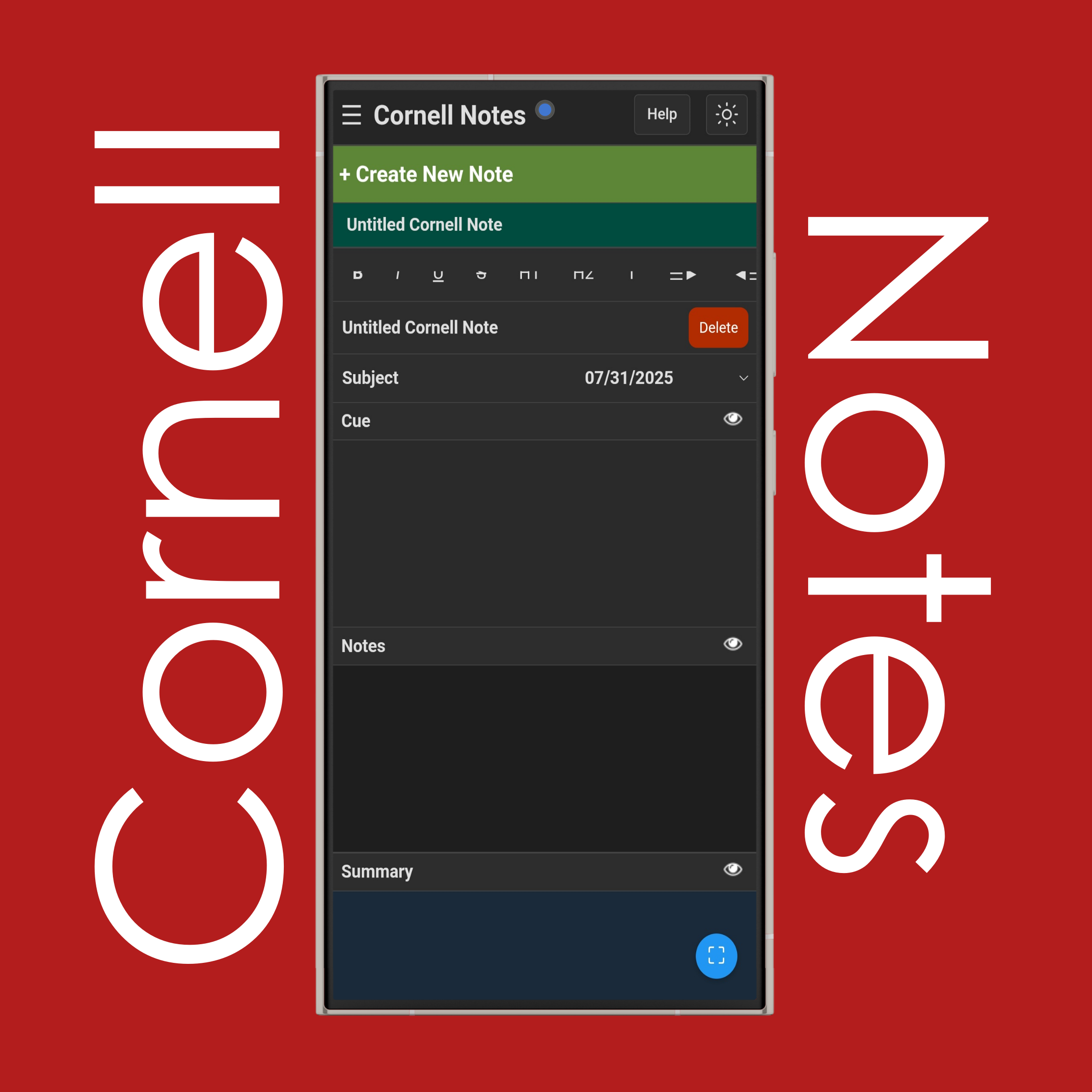
Tap + Create New Note button to create a new untitled note.

NOTE: Tap any blank space on the screen to close ☰ Cornell Notes List.

Online Cornell Notes

First, tap ☰ Cornell Notes List, select a note, and then tap Delete button to permanently remove the selected note with the data in it.

Delete Cornell Notes

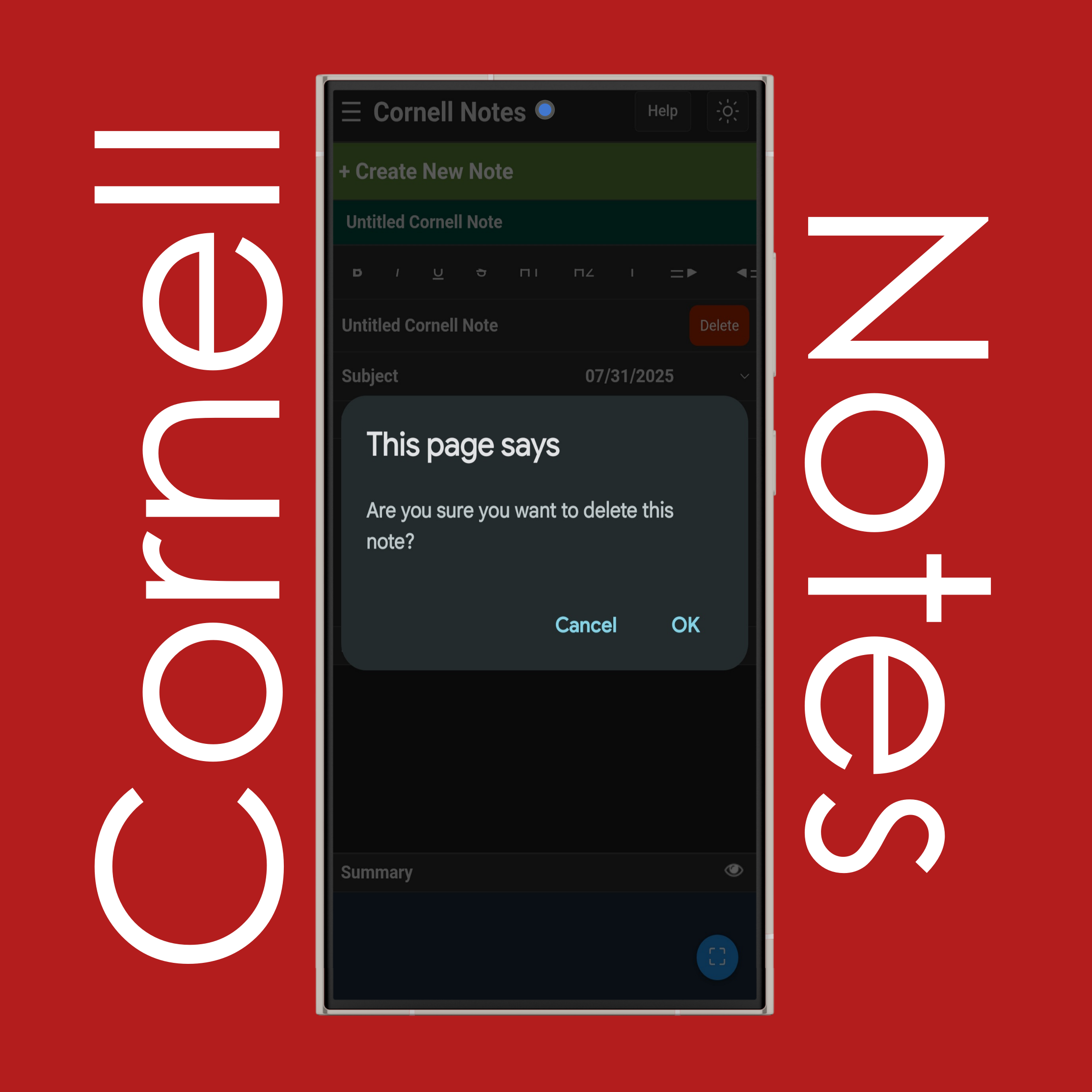
To confirm Cornell note deleting, tap OK or tap Cancel to cancel.

Online Cornell Notes

Tap Untitled Cornell Note to rename a note.

Rename Cornell Notes

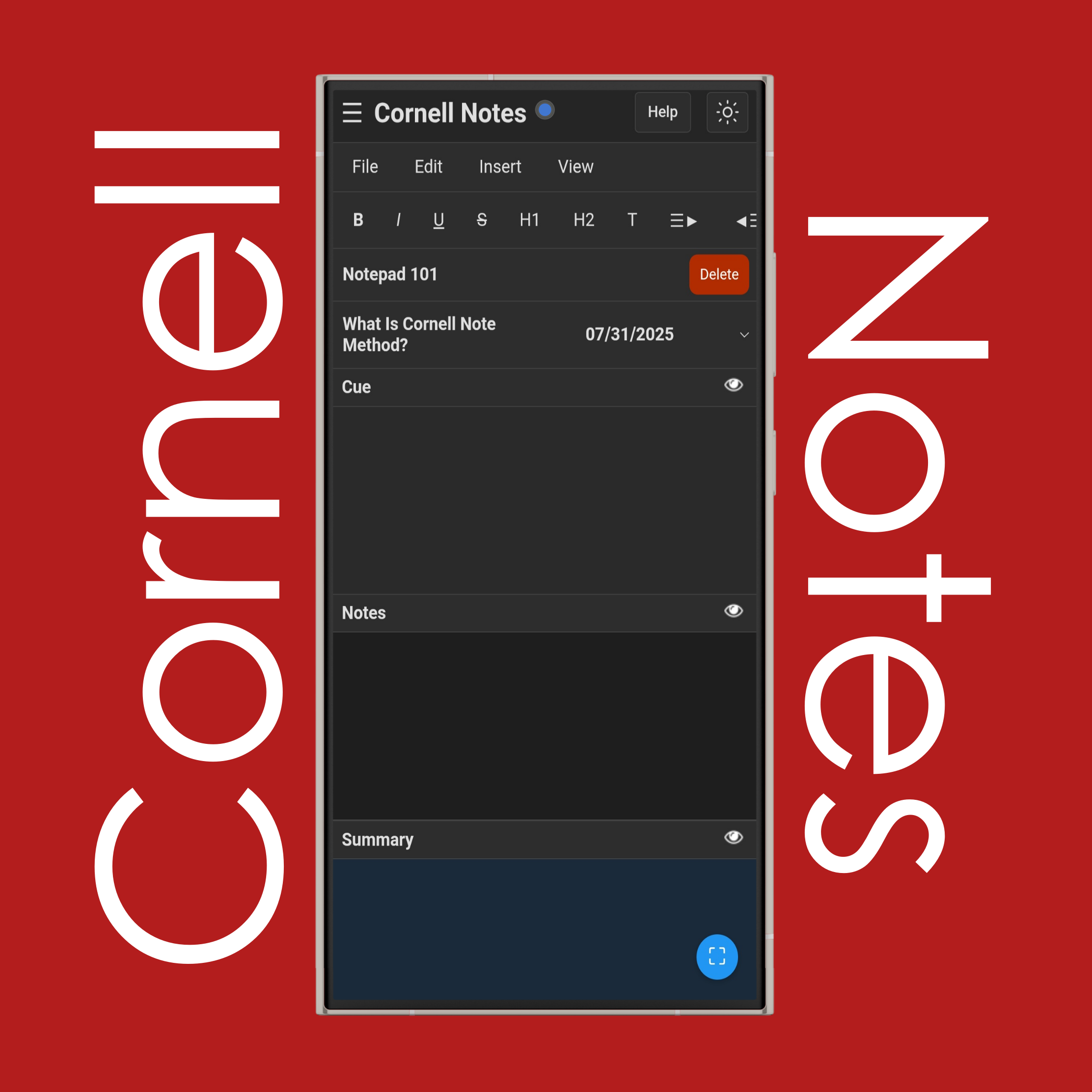
Type the new note name, new subject name, and optionally select a date and tap/click any black space to save.

Cornell Notes File Menu

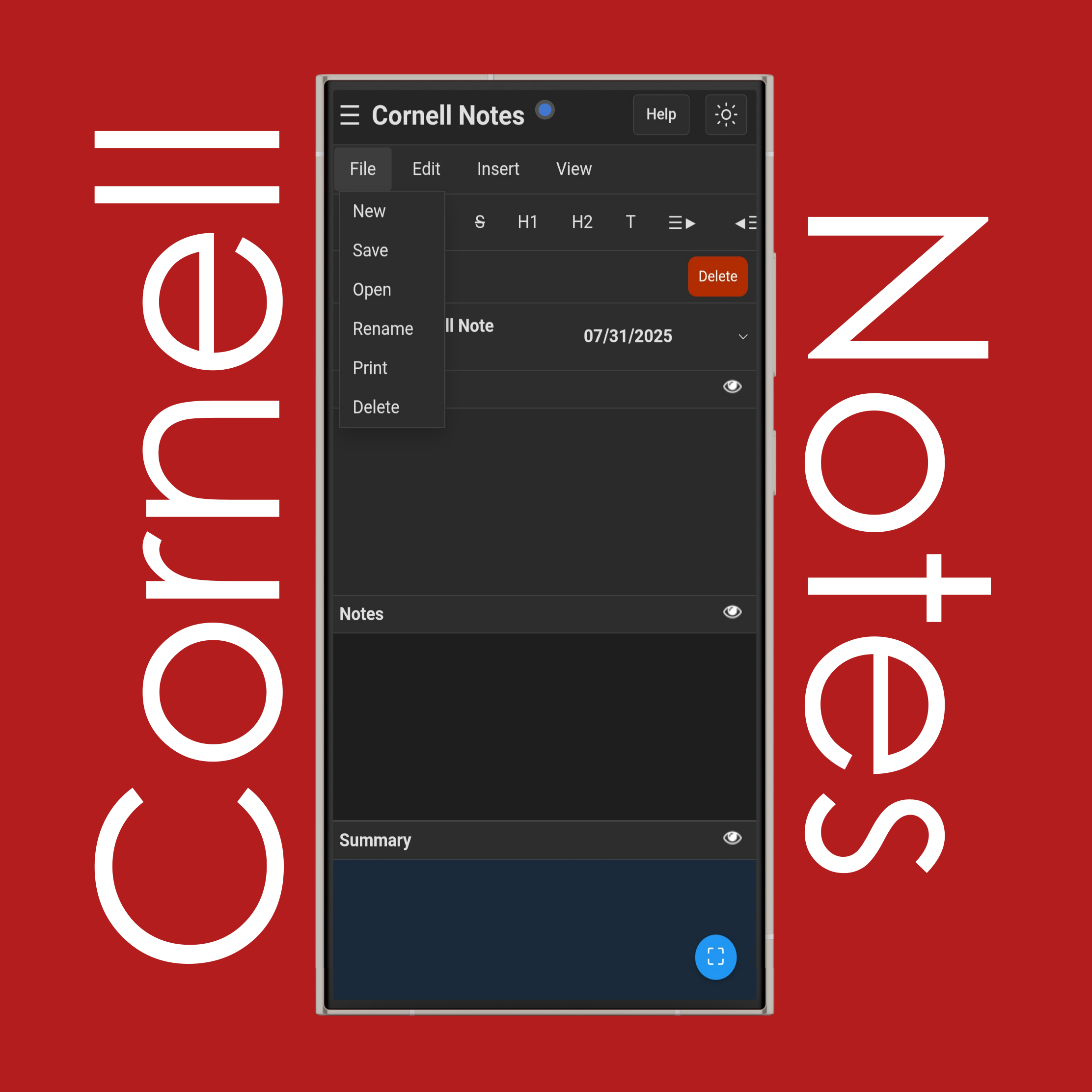
File menu is where you can do things like create, open, save or delete:

Tap/click New to create a new note which appears on the left-sidebar on desktop, and in the ☰ Notes List on mobile.

Tap/click Save to download your selected/opened note to your device.

Tap/click Open to upload a .txt file to text editor from your computer.

Tap/click Rename to change the title of the selected/opened note.

Tap/click Print to print the selected/opened note or save it as a PDF.

Tap/click Delete to remove the selected/opened note completely from your notes list with data in it.

Cornell Notes Edit Menu

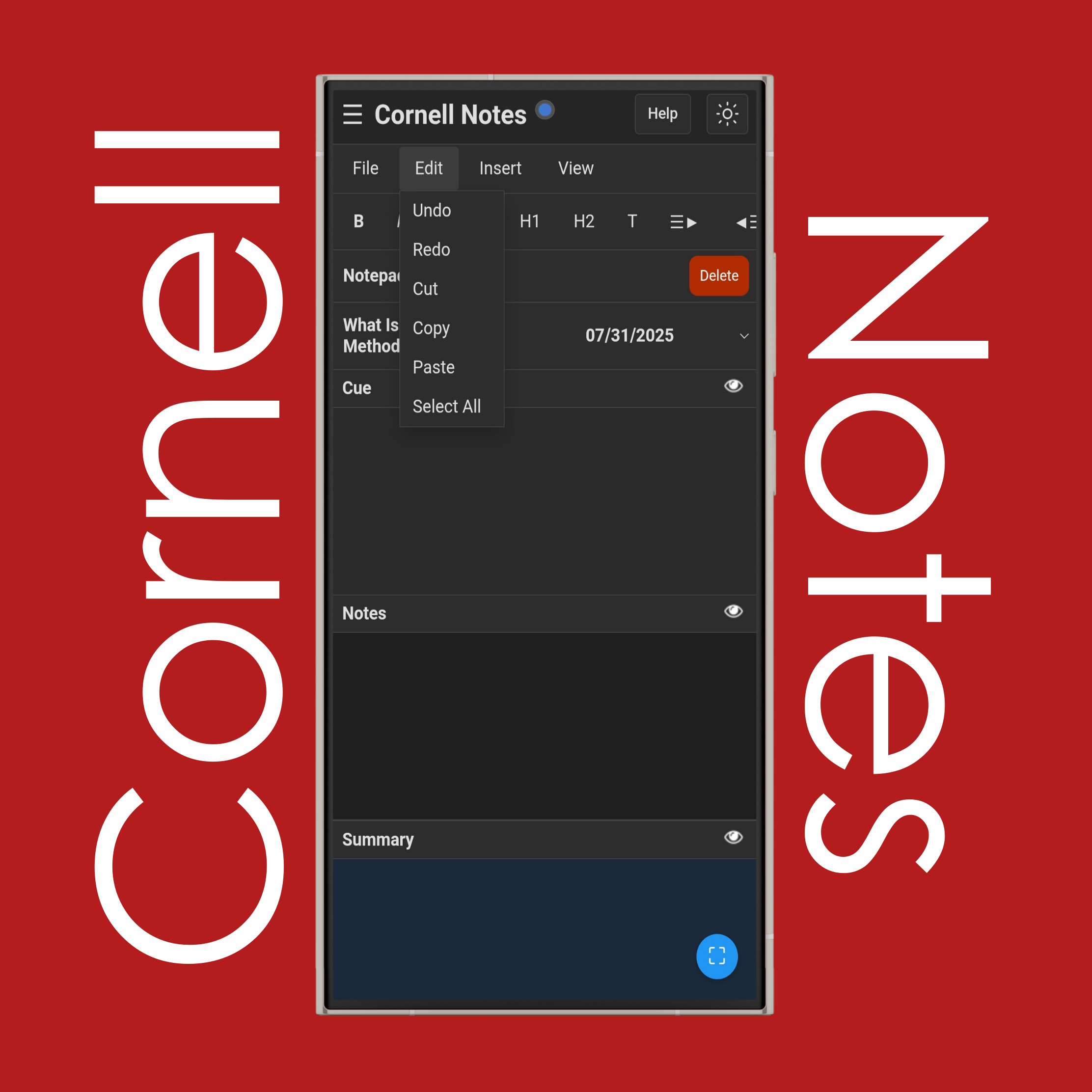
Edit menu is where you can do things like undo, redo, copy, paste and more:

Tap/click Undo to go back one step and undo the last change.

Tap/click Redo to bring back the change you just undid.

Tap/click Cut to remove the selected text and copy it to your clipboard.

Tap/click Copy to copy the selected text without removing it.

Tap/click Paste to insert the text into notepad you have copied from anywhere.

Tap/click Select All to highlight all text, images, and tables in the notepad.

Cornell Notes Insert Menu

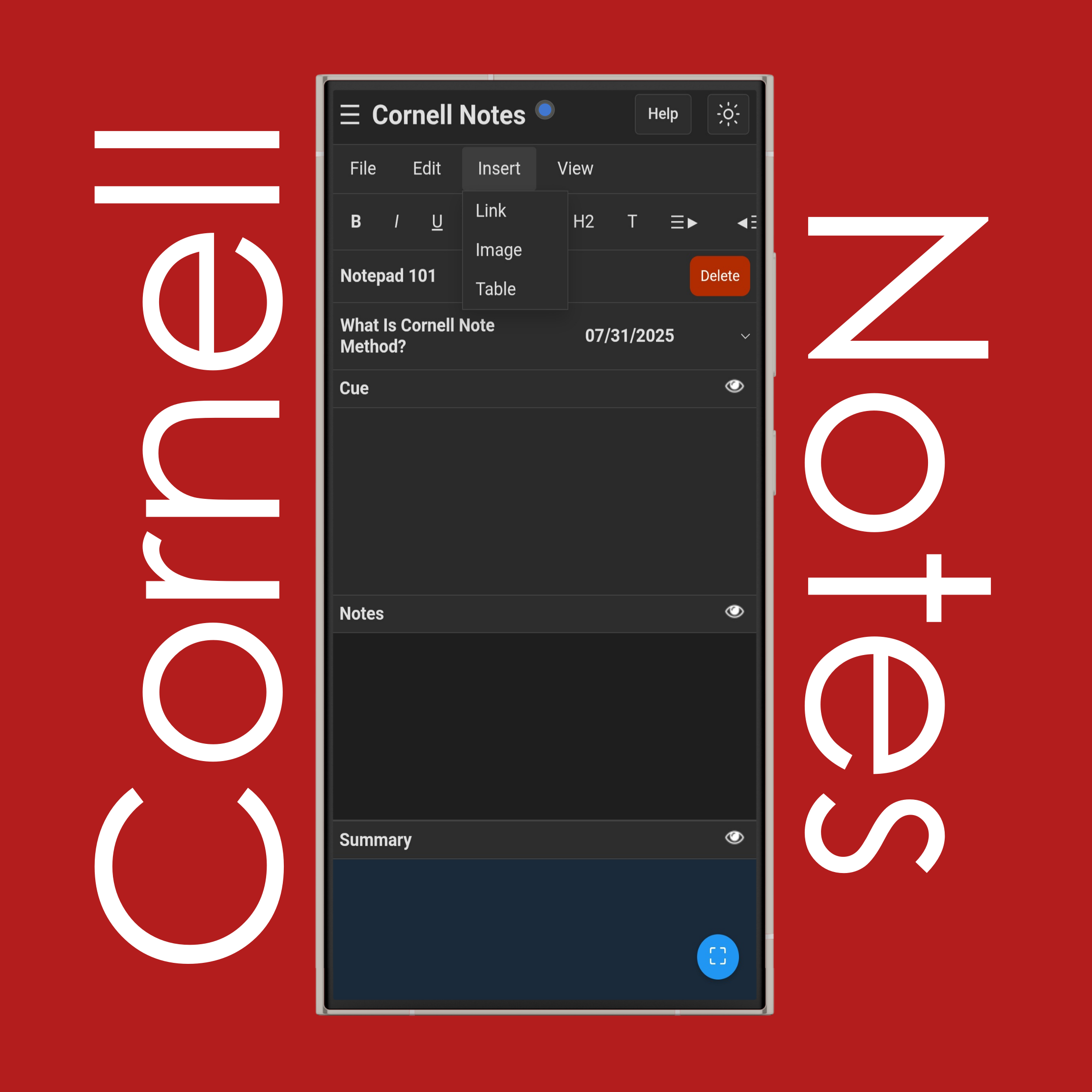
Insert menu is where you can do things like links, images and tables:

Tap/click Link to add a clickable link using the URL you enter.

Tap/click Image to upload an image from your device.

Tap/click Table to create a table by entering how many rows and columns you want.

Cornell Notes View Menu

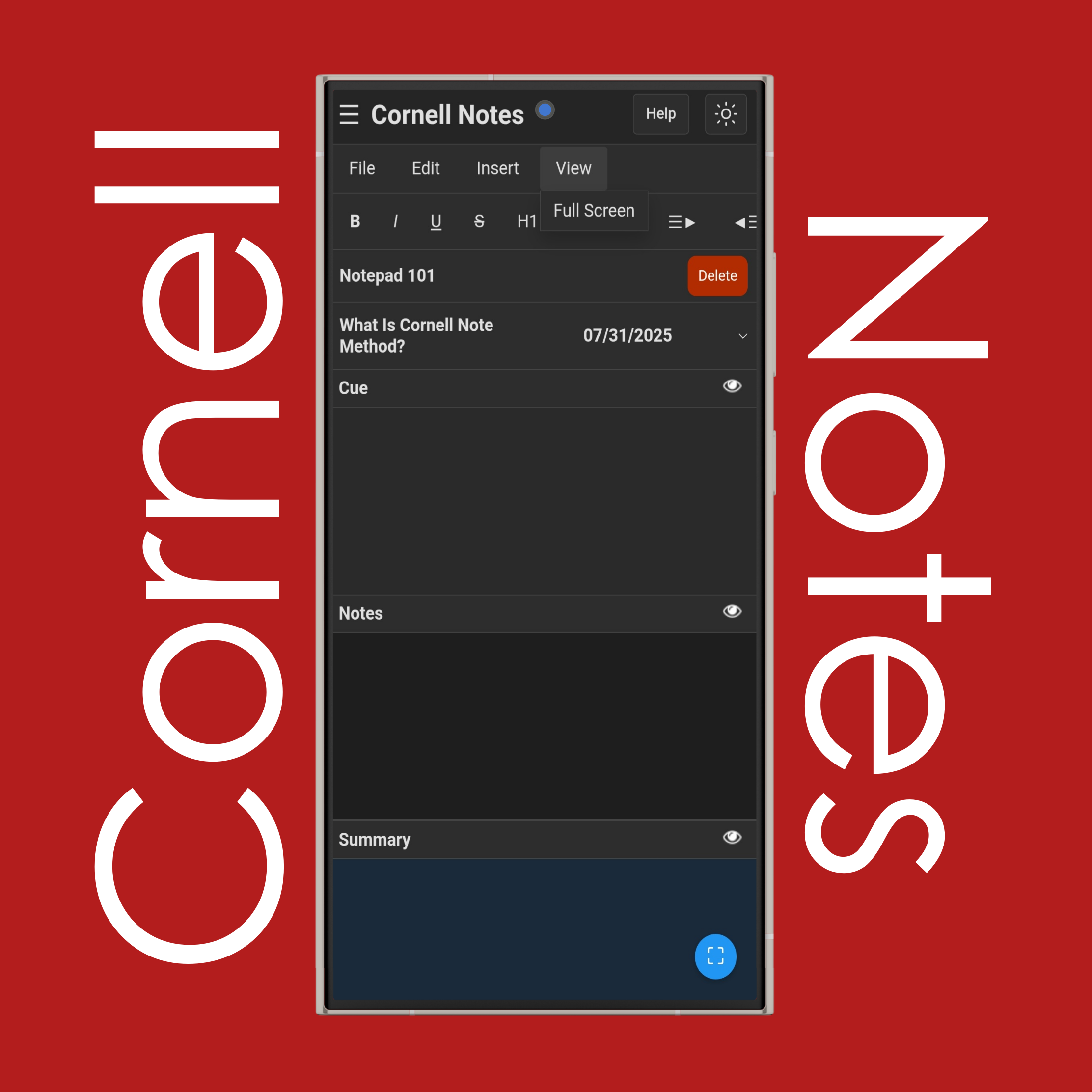
View menu is where you can do things like full screen and more:

Tap/click Full Screen to open the notepad in full-screen mode.

Cornell Notes Full Screen

Tap View > Full Screen or use the Full Screen button in the bottom right corner to enter or exit full screen mode.

Cornell Note-Taking Method

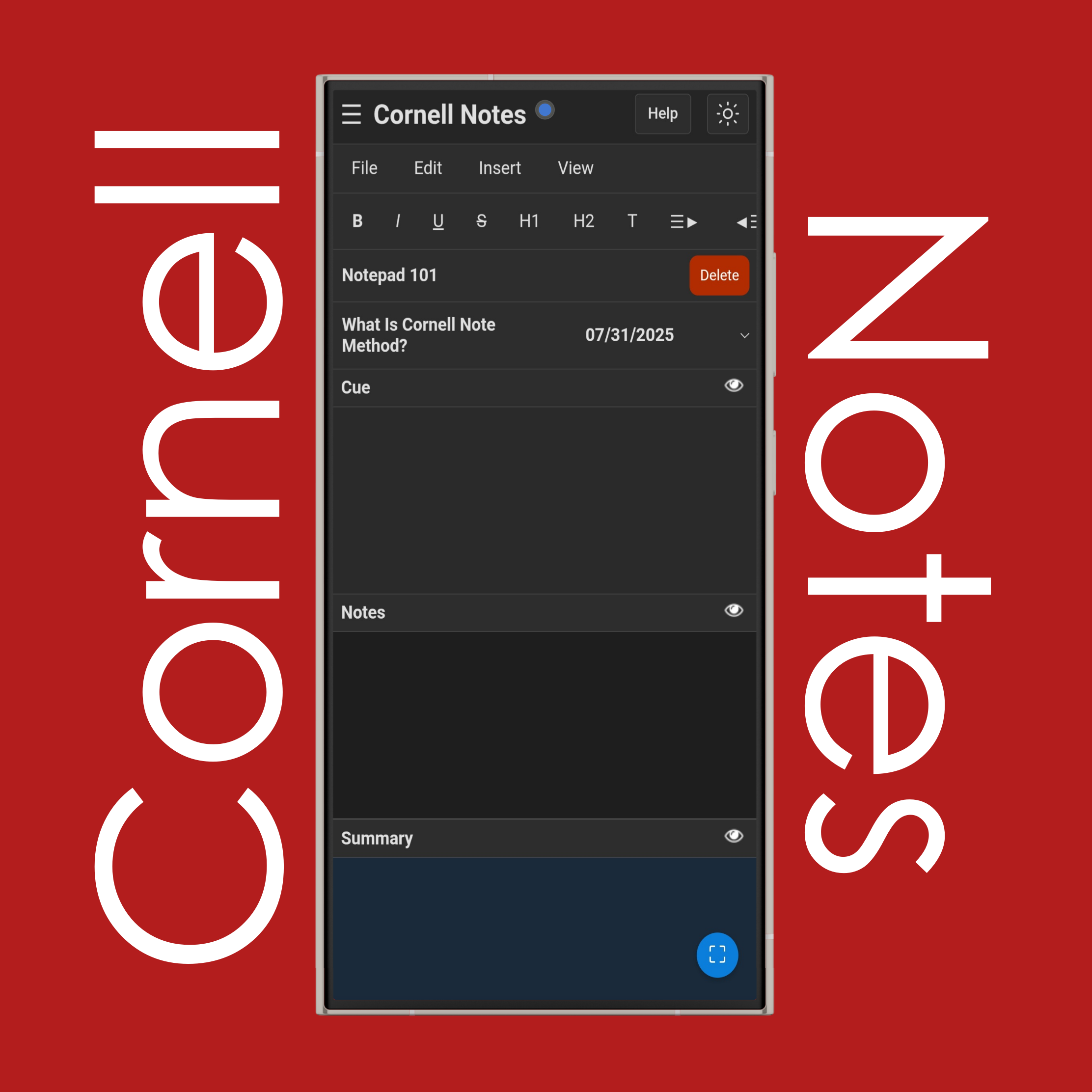
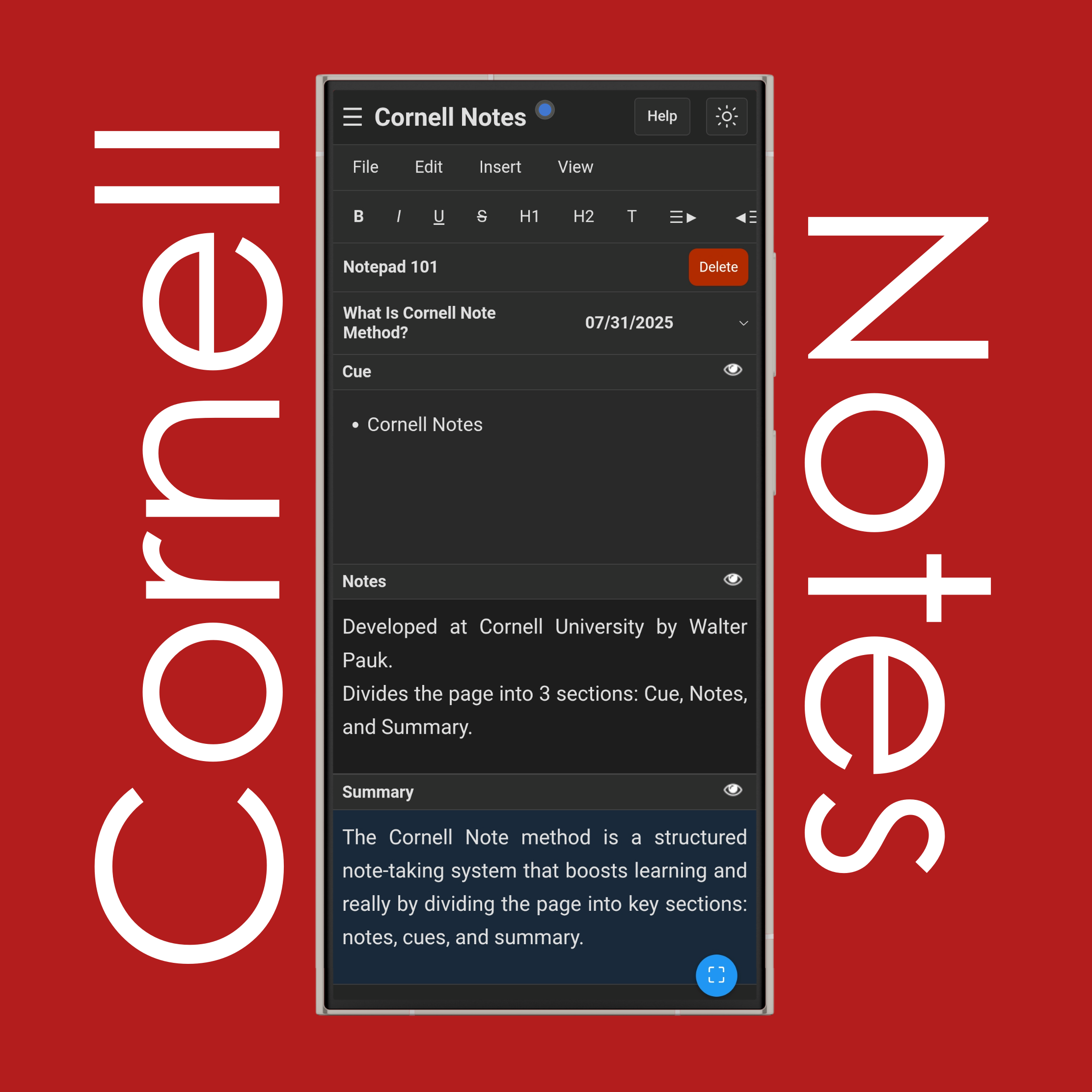
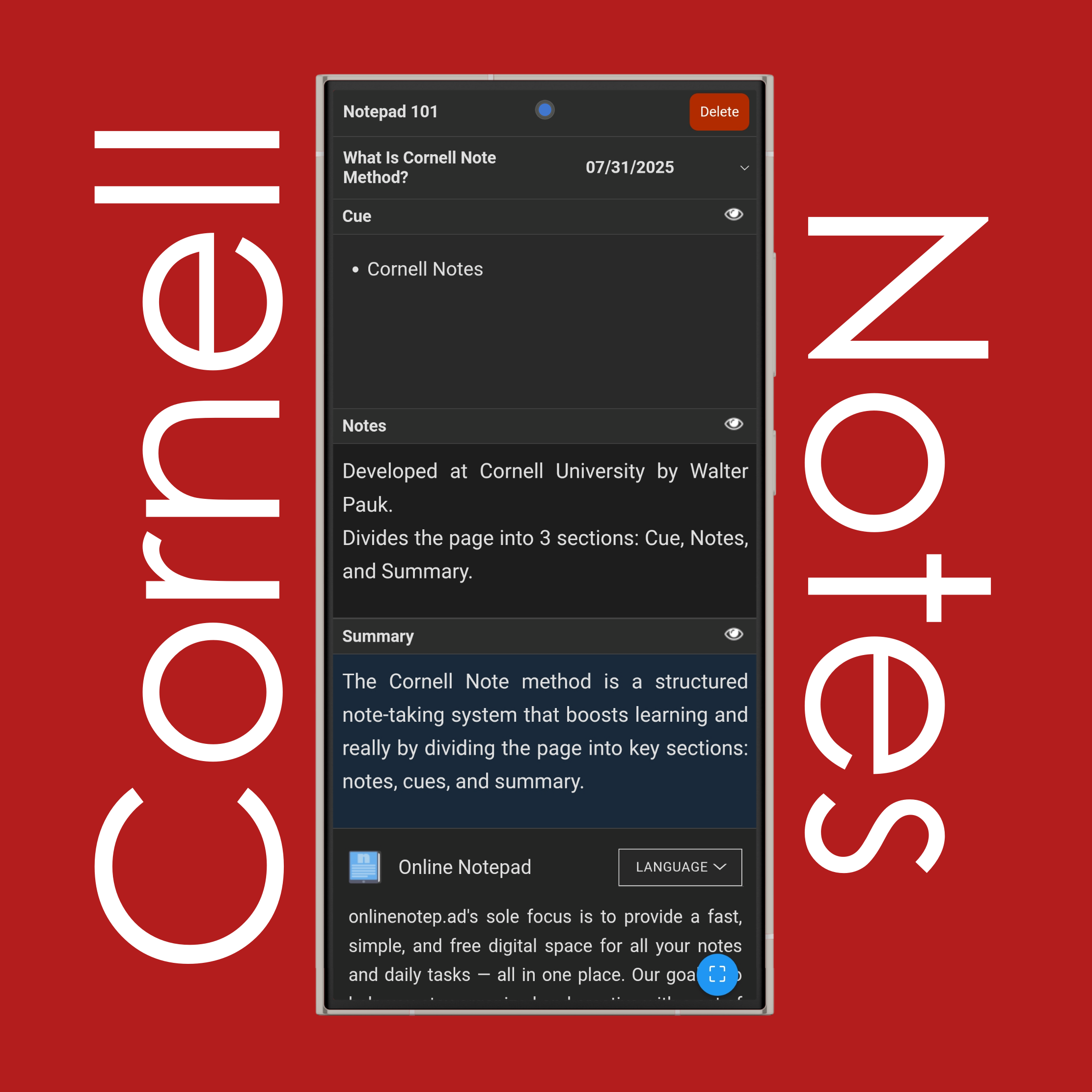
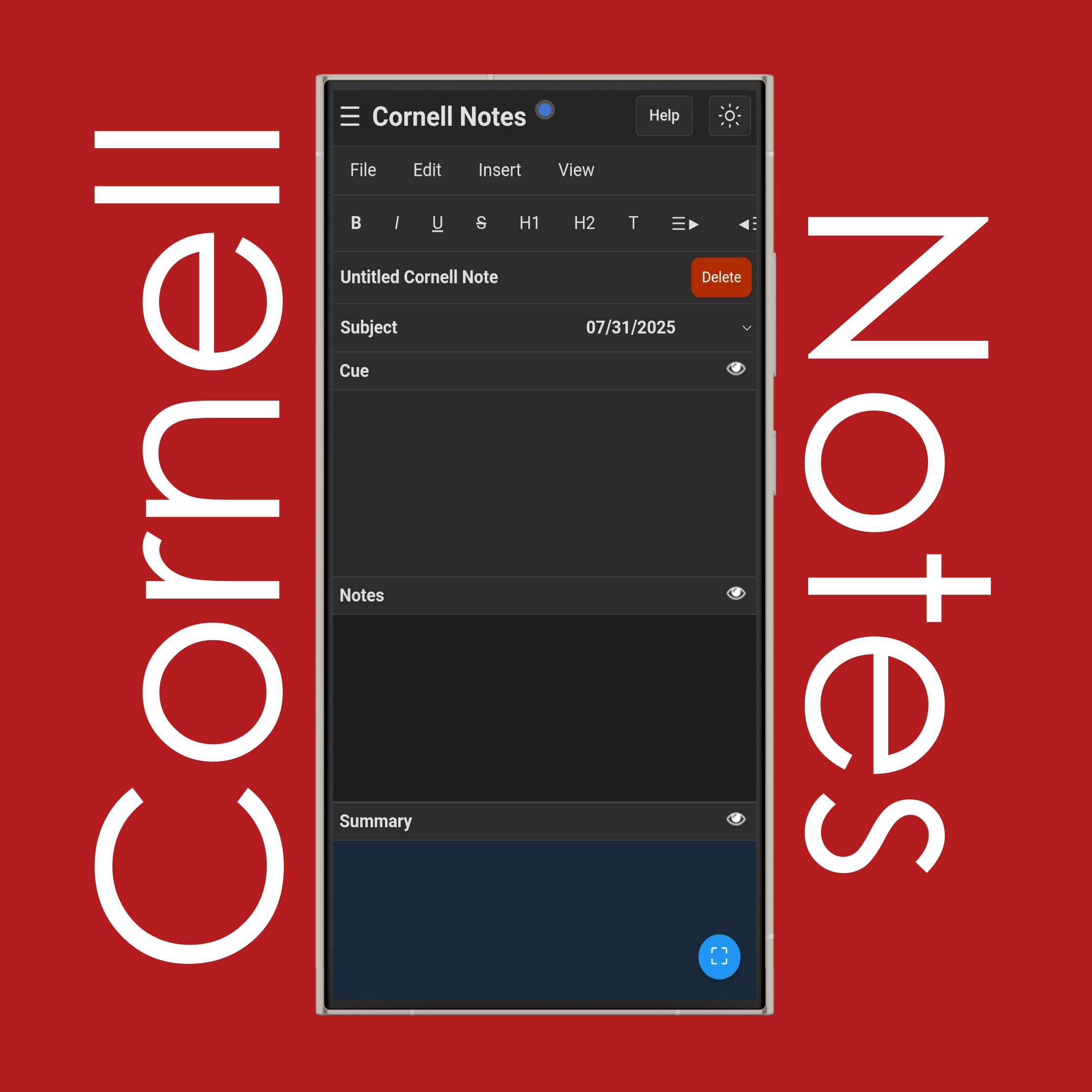
Type your notes separately in the Cues, Notes, and Summary sections for before, during, and after the lecture.

NOTE: Cornell notes display perfectly on desktop, with well-proportioned sections, but on mobile, the smaller screen makes it harder for them to fit and function properly.

Show/Hide Cornell Notes (Recite & Reflect)

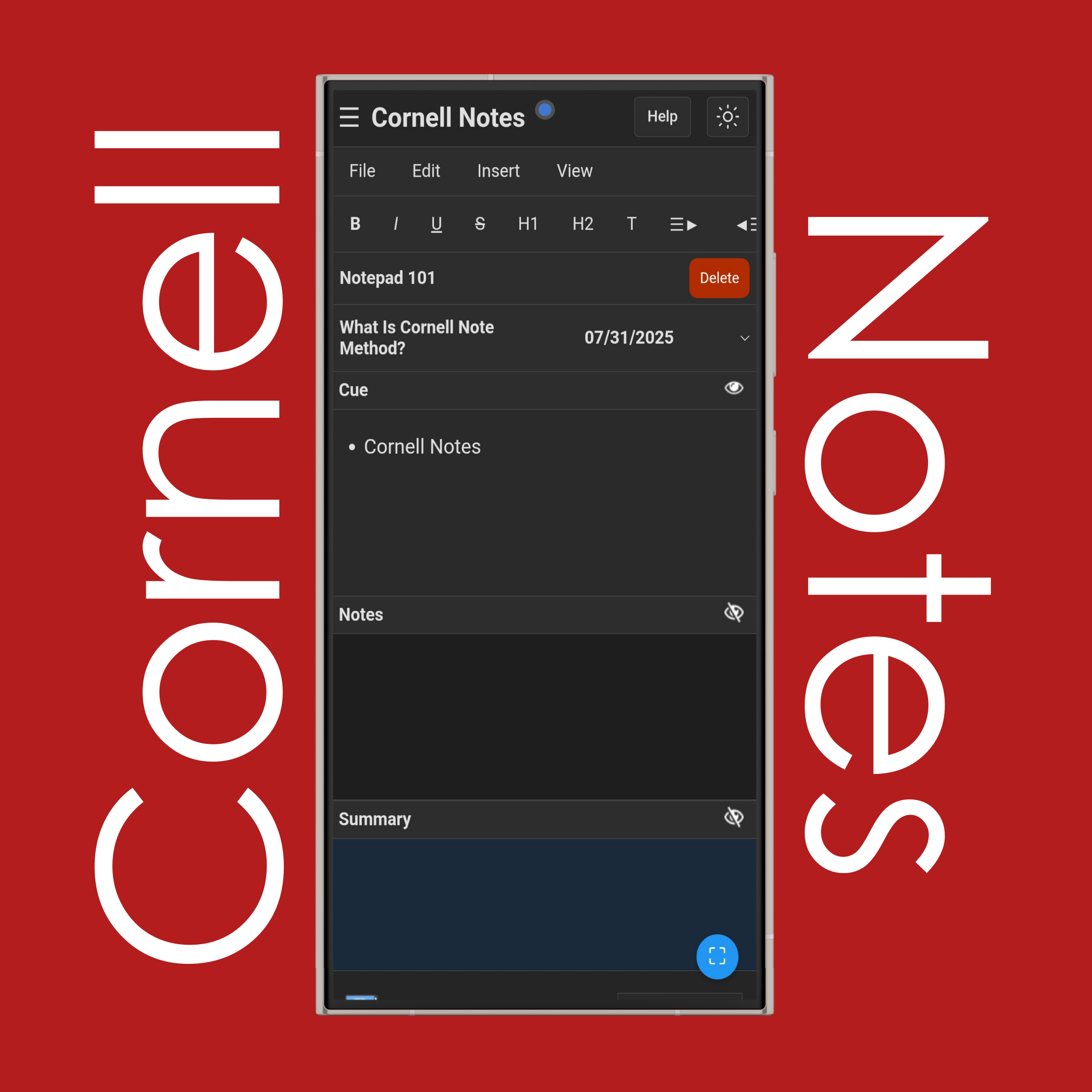
Tap the 👁 (eye symbol) to hide the text in the sections for studying before the exam and tap the 👁 (eye symbol) again to reveal it.

Cornell Notes Text Formatting

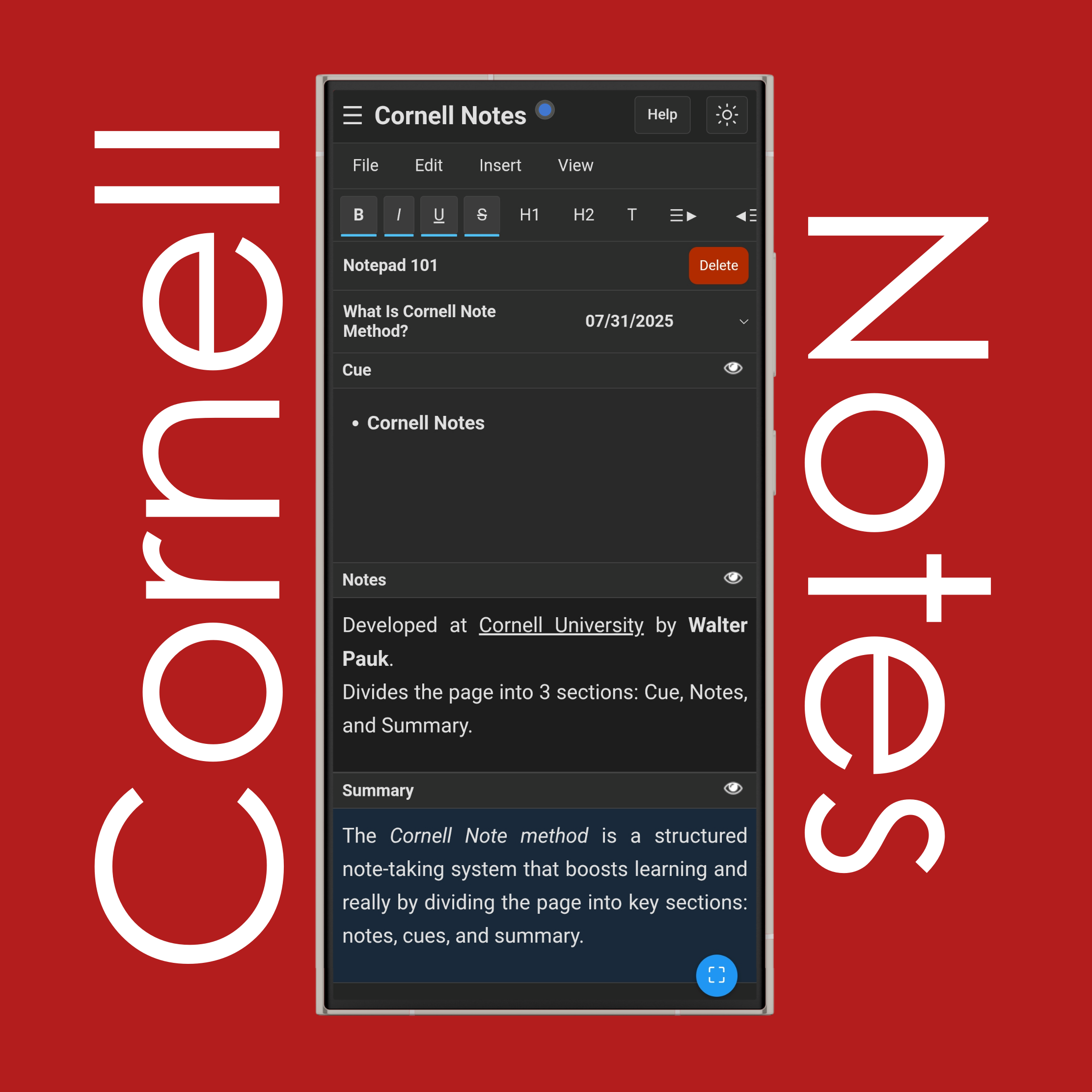
Use formatting toolbar to edit how text looks like on the notepad:

Tap/click 𝐁 to make the text bold.

Tap/click 𝐼 to make the text italic.

Tap/click to underline the text.

Tap/click S to strikethrough the text.

Tap/click H1 to make the text main heading.

Tap/click H2 to make the text sub-heading.

Tap/click T to revert the text to normal.

Tap/click ☰▶ to make the text left-alligned.

Tap/click ◀☰▶ to make the text center-alligned.

Tap/click ◀☰ to make the text right-alligned.

Tap/click ▢☰ to create bullet list.

Tap/click 1☰ to create numbered list.

Tap/click A+ to make the font size of the text larger.

Tap/click A- to make the font size of the text smaller.

Cornell Notes Light & Dark Mode

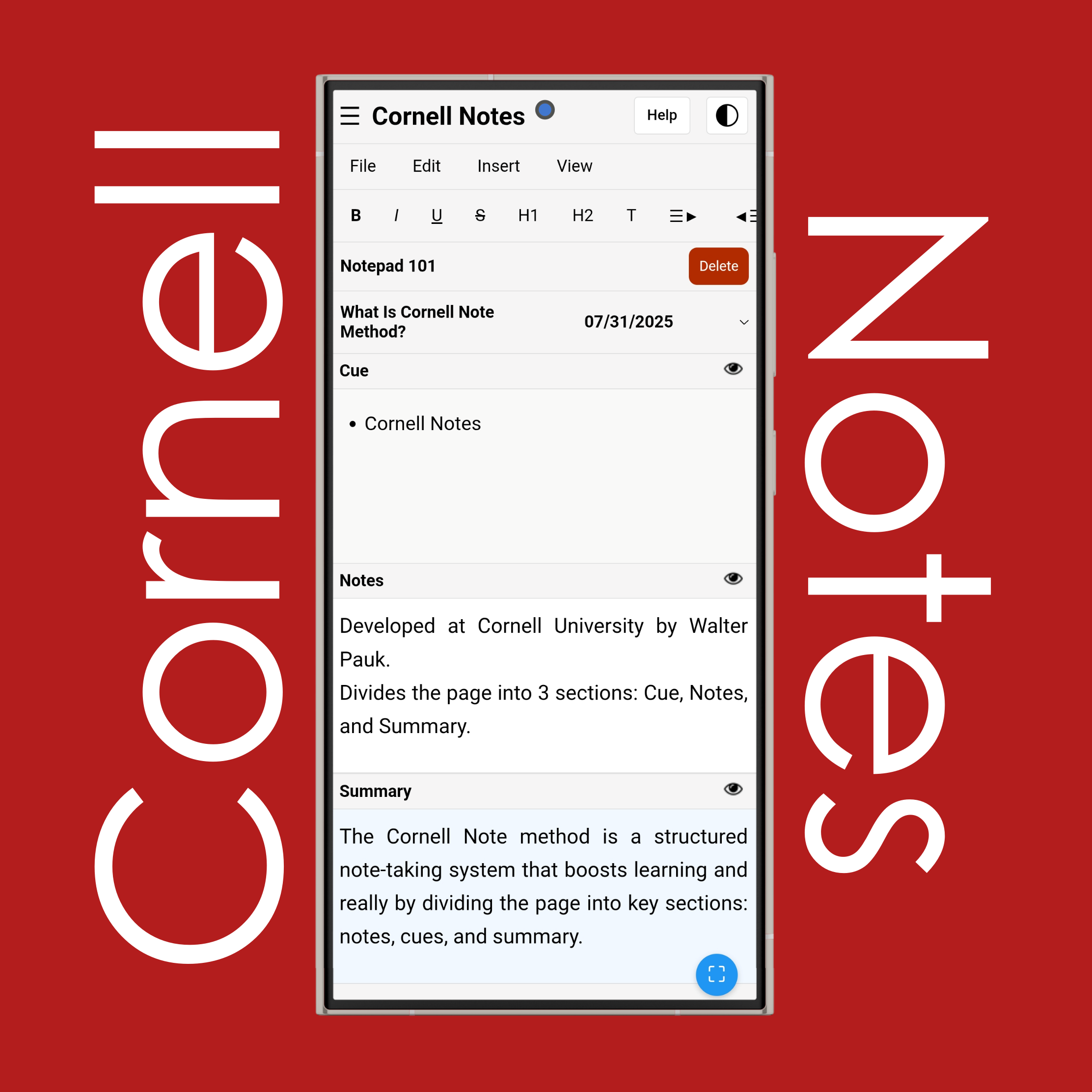
Tap the 'Sun' or 'Moon' button in the top right corner to switch between light and dark mode.

Cornell Notes Language Settings

Scroll to the footer (bottom of the site) to change the display language of the website — you can choose from up to 20 different languages.

What are the 5 steps of Cornell Notes?

The 5 steps of Cornell Notes are five things you do to make your notes more useful. They stand for Record, Reduce, Recite, Reflect, and Review. First, you record the important stuff during the lecture in the notes section. Then you reduce it by pulling out keywords or short questions in the cues section. Next, you recite by trying to answer those questions out loud without looking at your notes. After that, you reflect on what you've learned — think about how it connects to other things you know. Finally, you review your notes regularly so you don’t forget the material.

What is the Cornell rule for notes?

The Cornell rule is all about dividing your note page into three parts: the cues column on the left, the notes section on the right, and the summary box at the bottom. During class, you write your main notes on the right. After class, you add keywords or questions to the left side to help you study later. Then, at the bottom, you write a short summary of what the page is mostly about. This layout makes it easier to understand, remember, and review what you've learned.

What is the Cornell note taking method?

The Cornell note-taking method is a simple and organized way to take notes that actually helps you study better. Instead of writing things randomly, you divide your page into parts that each have a purpose. You take notes on the right during class, add study questions or cues on the left later, and finish by writing a summary at the bottom. It’s designed to help you stay focused, review more easily, and remember the material longer — especially helpful before tests.

How to write a Cornell note?

To write a Cornell note, start by drawing a line down your page, about one-third from the left. Then draw a box across the bottom of the page. During class, write your main notes in the big right section. After class, look over your notes and write keywords or short questions in the left column. This helps you study later. Lastly, write a short summary in the bottom box that explains what the notes were about in your own words.

If you have additional questions or need assistance, please contact our support team.